Prayer Stones Turkey, spring, 2011
A Poetic-Visual Meditation on "the Sacred,"
Islamic Sacred Art and Sacred Knowledge
Double-page illuminations for "An Imaginary Book" Chapter I
I reach for a piece of wood. It turns into a lute.
I do some meanness. It turns out helpful.
I say one must not travel during the holy month.
Then I start out, and wonderful things happen.
Rumi

[Click on images to enlarge]
Introduction
In the Spring of 2011 my wife Gloria and I traveled to Turkey. It was one of the most transformative journeys of my life. In the words of Rumi: "wonderful things happened."
This online photography project, entitled Prayer Stones began as an informal blog documenting our trip to Turkey to be shared with friends and family. Then spontaneously the project took on a creative life of its own and turned into what you will be seeing here, something much more personal and poetic. Prayer Stones is a visual and textual meditation on the sacred; it tells of extraordinary experiences of the sacred which I encountered while viewing Islamic sacred art and upon hearing the Islamic Call to Prayer, the Ezan, while traveling in Turkey.
My trip to Turkey, and my experiences of the sacred there, initiated for me a new and unusual kind of creative process. Prayer Stones was to be just the initiating leaping-off point for what would eventually become a collection of nine core projects that form an integrated unity entitled "An Imaginary Book." The "book" also includes five peripheral projects, a Preface, an Epilogue and a collection of textual excerpts by Islamic scholars entitled Sacred Art, Sacred Knowledge.
All of the online projects are collected at this link: "An Imaginary Book": A Brief Introduction. For each project there is a sample image, a brief descriptive introduction of the project, and a hyperlink which will take you to the complete online version of the project.
I encourage you to read my Preface to "An Imaginary Book" before venturing any further into Prayer Stones. It contains important contextual information that should make viewing this and the other projects more rewarding. The Preface includes a detailed explanation on how I construct the symmetrical photographs, and it explains the meaning of the title. I encourage you to see the projects in the order in which they were produced; the list of project titles in the Preface and in the Brief Introduction are presented in the chronological sequence of their creation.
*
Overview ~ Why I Traveled to Turkey
Since the year 2000 I had been making a series of photography projects inspired by the music and writings of American composer Morton Feldman (1926-1987). Visit The Departing Landscape project, and the Triadic Memories project. Much of Feldman’s late music was inspired by the Turkish rugs he had collected. I thought it would be important, if possible, and interesting to see first hand the visual art, and the culture itself, that was so intimately connected to Feldman's music and thus my own creative process.
Since traveling in Turkey (May 2011) I have devoted all of two years working on "An Imaginary Book." My creative process has been inspired by the experiences I will describe here in Prayer Stones, and my intensive study of Islamic sacred art and sacred knowledge. I have been particularly interested in the scholarly writings on the Qur'anic, Prophetic and Sufic traditions.
I also wanted to travel to Turkey to pay homage to Rumi, the great 13th century Sufi poet-saint, by visiting his memorial shrine in Konya, Turkey. I had come to know and read and love Rumi's poetry since 1987 through my meditation practices and studies of the Hindu yogic scriptures. I hold Rumi's teachings and poetry in the highest regard as I am sure he was a true saint. Fortunately this tour's itinerary made it possible for us to visit Rumi's shrine.
Rumi's Shrine
As I entered the shrine in Konya I was deeply moved as I joined so many other travelers (who had obviously come great distances from all parts of the world as well) in expressing their heartfelt love and gratitude for the life and work of this great being. Rumi's sacred presence was palpable in the shrine; and there was a profound sense of deep silence in the space as visitors, steeped in devotion, moved respectfully and quietly through the shrine. Indeed this sacred presence can be felt in Rumi's poetry, of which I have include several examples here in the Prayer Stones project.
In the shrine there was a display of Rumi's books included his personal illuminated Qur'an. The Qur'an seemed alive and glowing, as if breathing, with its own internal light and sacred presence. I was to have a similar and even more dramatic experience while viewing illuminated Quran's later on in the trip at a museum in Istanbul.
Being in Rumi's shrine, where he lived and prayed, and where his remains were buried, and feeling the deep love and respect of all the visitors and pilgrims, and seeing his sacred books was one of the most important experiences of the trip for me. We also experienced a program of sacred music and the sacred dancing of whirling dervishes. It was amazing to see the spinning Sufis become the still point of an amazingly silent form of turning, circular energy. I had always longed to experience this ritual form of meditative dance which was Rumi's inspiration. He had been the founder of the Sufi order known as the Mevlevi Whirling Dervishes. (To learn more about Rumi click here)
The Ancient Ruins
I had wanted to visit Turkey in part to see its many famous ancient ruins. I'm fascinated by really old places, and Turkey has lots of them! In fact every parcel of land, every stone and piece of ruin we encountered on our trip seemed to be haunted by a sense of the vastness of time and ancient human experience. For example, when we visited the famous archeological site of Troy we could actually see how the excavations revealed nine layers of civilizations! One on top of the other, nine civilizations had been born and then destroyed throughout the years dating back to 3000-2600 BC!


Single Image #4: "Cyprus & Ruin Fragment, Turkish Landscape" 19x25" double-page illumination
As we traveled through Turkey in our speedy bus (which seemed always to be moving on to our next important destination) we were frequently graced with surprising glimpses of ruin fragments just laying, eternally still, in distant fields or on the sides of mountains. One of my favorite images from the trip ("Cyprus & Ruin" above) was taken from the bus.
The Mosques
I loved our visits to several mosques. We were able to go inside and experience several large mosques, and one small, local mosque. I was deeply impressed by their simple elegance and the sense of vastness and openness and roundness of space that was filled with the devotional energy of the ritual prayers that had been performed there five times each day. The mysterious beauty of the mosques' geometrical designs and the elegant calligraphic ornamentations consisting of the Prophet's words were especially attractive to me. I had a great longing to know what the words meant. When I got back home from the trip part of my Islamic studies involved the Qur'an and the Hadiths of the Prophet.
The Landscapes
Turkey has an amazing variety of landscapes: beautiful vast mountain ranges, deserts, the fascinating, strange rock formations of Cappadocia; cave dwellings, underground cities, elegant sprawling hot springs with mineral terraces. We saw herds of sheep grazing on the sides of rough, dry mountains attended by shepherds dressed in woolen cloaks. And throughout the landscapes, I would often be reminded of the presence of human history in the form of ruin fragments.
The Ezan
Much of my photography, dating as far back as the 1960’s, had been influenced by music including jazz, classical, and contemporary works such as those of Morton Feldman. Interestingly, on the trip to Turkey I experienced, repeatedly, a hauntingly beautiful sound - though not exactly music - that was completely new to me, and yet transformative in its expression of deep longing for the sacred. Many of the photographs you'll be seeing in Prayer Stones have been inspired by my experience of the Ezan, the Islamic Call to Prayer.
Listen, if you can stand to.
Union with the Friend means not being who you've been,
being instead silence: A place: A view
where language is inside seeing.
Union with the Friend means not being who you've been,
being instead silence: A place: A view
where language is inside seeing.
Rumi
*
As we traveled through Turkey I photographed spontaneously, and like most tourists I was simply reacting at a gut level while all the time feeling overwhelmed by all the amazing things I was seeing and feeling and not understanding in this wonderful and ancient foreign culture and landscape. I wanted to bring it all back home with me somehow. I took many many pictures, all the while feeling it was futile.
It was only when I returned home and had time to quietly contemplate my experiences and really begin to work with my collection of photographs in a deeply considered way, that I was able to get in touch with the true significance of my travel experiences in Turkey. It had begun by trying to create a travel blog about our trip that I could share with friends and family; however, magically the blog turned into Prayer Stones, and then Prayer Stones became the initiating inspiration for the entire collection of projects entitled "An Imaginary Book."
Suffice it to say, the trip was filled to overflowing with the presence of magic and the sacred. I left Turkey with an open heart and a feeling of longing for something more. I felt as if I had in some strange way found my ancient homeland. I didn't want to leave. Something truly great had happened to me . . . and I didn't quite know what it was.
An Inward Journey
When I got home, I began studying with great enthusiasm and concentration about the sacred art and sacred knowledge traditions of Islam. My studies helped me to sustain, enrich, deepen and clarify the love and the feeling of the sacred I had experienced so often during the trip but was too overwhelmed at the time to really understand or more carefully contemplate. The two year process of creating the nine core projects of "An Imaginary Book" has been for me a visual meditation, a deeply meaningful process of integrating and understanding all that I had received from this great adventure, this journey that has turned out to be as much inward as outward.

Ezan Diptych #2: Ruin Fragments & poppies / Cappadocia Landscape 19x25" double-page illumination

Prayer Stones #12: Ruin Fragments, Green Grass, Troy Archaeological site 19x25" double-page illumination 19x25"
*
The Ezan : Call to Prayer
We began our travels in Istanbul. We had arrived at our hotel room in the afternoon. Our window was just across from one of the many minarets or towers one would see in most any Turkish city or village. We soon discovered that the tower contained loud speakers which broadcast the Ezan, the Islamic Call to Prayer five prescribed times each day. The times vary throughout the year, but generally they are: an hour before sunrise, noontime, afternoon, early evening, and one hour after sunset. To hear an atmospheric recording of the Ezan made in Istanbul click here.
The Call To Prayer was not broadcast simultaneously from the many minarets throughout the historic part of the city where we were staying; the minarets began and ended at approximately the same time, though each one began its broadcast independently from the others. When I heard the Ezan broadcast after sunset that first evening from our hotel room the sound was spatially vast and hauntingly atmospheric, resembling at times the deep mysterious resonating echos I have heard in a large canyon.
Our first morning
Our first morning in Istanbul began before sunrise with an intense experience of the Ezan. I was awakened by the BLASTING sound of the Call to Prayer from the minaret just outside our opened hotel window! As I lay in bed in a half-sleep listening to the alone quavering voice summoning Muslims to prayer, I actually got goosebumps and shivers in response to the sacredness of the sound echoing longingly throughout the ancient parts of the city.
The Call To Prayer drew me deeply inside myself; my mind stopped; I was experiencing something truly numinous, sacred, transcendental. The Ezan was awakening me to something deep inside me. The experience felt like an initiation.
There we several special moments like this during our time in Turkey. They transformed my vacation into a pilgrimage, though at the time I did not quite understand it that way.

Ezan Diptych #3: Mountains / Stadium, Temple of Acropolis, Pergamon & the sound of the Ezan 19x25"
In the Mountains
Another magical experience of the Ezan occurred on the side of a mountain while visiting Pergamon. Clouds were floating through the mountain tops as I was looking down at the ancient ruins of the Acropolis Stadium when I began to hear The Call to Prayer being broadcast from the large sprawling Turkish city below the ruins. The haunting sound of the Ezan rose up like the gentle fragrance from a beautiful flower, and it's numinous, sacred presence seemed to permeate the clouds, the surrounding mountains, the stone ruins . . . and some interior space deep within myself.
Prayer Stones
I have an intuitive sense that all objects have at their very center an interior life, a consciousness not unlike my own. click here The ancient stones and pieces of ruin fragments I photographed in Turkey seemed to me especially alive with this "energy," as if they surely must have in some inexplicable way absorbed the history of human experience and the mysteries of nature they had secretly witnessed. And all the stones throughout the ancient landscapes of what was now named Turkey surely absorbed the sacred sounds of the Ezan, so full of longing for God, and the ritual prayers of the Islamic peoples which had occurred day after day, five times each day, for so many, many years.
I came to feel that the beautiful, musical language of the Ezan, with its heartfelt outcry, pervaded everything I had come to love in Turkey: the landscapes, of course, but also the mosques, Rumi's Shrine, the illuminated Qur'ans . . . and especially the stones and the marble surfaces of the ancient ruins. When I look at my photographs of Turkey, I feel the presence of Ezan pervading the images; the Ezan is inside the objects, inside the spaces, inside the light, inside me.

Prayer Stones #14 Marble surface, Hagia Sophia 19x25" double-page illumination
The Illuminated Qur'ans : An Encounter
I had never seen an illuminated Qur'an in my life, but the ones I saw during our trip to Turkey had a mezmerizing, transforming affect on me. When we visited the Turkish and Islamic Art Museum in Istanbul, and the Rumi Shrine in Konya, I had no expectations of what I would see or experience there. Though I loved the poetry of Rumi, I knew practically nothing of the Islamic or Sufic traditions. However when I saw the magnificent, ancient illuminated Qur’ans on display at the shrine and at the museum I experienced a palpable sacred presence in those holy books and their images. It was very similar to what I had experienced when I heard the Ezan that first morning in Istanbul or in the mountains surrounding Pergamon. I was so deeply moved by the ineffable beauty of the opened, double-page illuminations I saw at the museum that my heart achingly opened, my mind stopped, and my eyes filled with tears of love and longing.
The illuminations appeared to glow from within with a mysterious, subtle light, that is to say the images seemed self-luminous; the Qur'ans, their images and the calligraphy seemed alive, as if they were breathing. As I was looking at the Qur'ans something more than ordinary "seeing" was going on: I later came to understand that I had been experiencing those holy books through the "eyes" of an opened heart; I was having an encounter with the sacred.
I could sense in the abstract visual power of the double-page illuminations, in the greatly detailed, gold laced, painstaking work that went into the making of them, a clarity of intention, a profound sense of devotion and respect which I imagined the artists surely must have felt for both the Qur'an and it's holy words, and perhaps for their own profoundly accomplished and yet selfless artistic practice. [To see some examples of Qur’an illuminations click here. To learn more about the Qur'an click here]
There was something impersonal about the Qur'an illuminations that interested me even as the presence of the sacred was so palpable in the images. I thought perhaps the abstract graphic imagery contributed to the impersonal feeling-tone I experienced. I read later that the visual images in the Qur'an were intended to help turn the reader's attention inward . . . as a kind of preparation for the reading of the Holy Words which are considered the direct revelation of God. The artisans or craftsmen were expected to achieve in their work a delicate balance: they needed to make designs which would not draw attention to themselves as makers, and yet at the same time be evocative enough to facilitate the reader's coming into something like a “mystical, silent conversation” with The Creator through His Holy Words which were hand written in the most exquisite and elegant calligraphic forms.
Double-Page Illuminations
I was so deeply impressed by the illuminated Qur'ans I saw in Turkey that I began to nurture a fantasy of creating my own book of images somehow modeled after them. After I discovered the process of making the Four-fold symmetrical photographs (I will write about this further below) and realized my blog had turned into a more involved project which I eventually was to name Prayer Stones, I began thinking of the project, Prayer Stones, as a collection of double-page illuminations for an imaginary book. At that point in time I had no idea that the concept of an imaginary book would manifest into a large collection of related projects.
Once I began thinking of the symmetrical photographs as if they were double-page illuminations, I began wondering how I could more clearly visually reference that idea. I had obtained Martin Lings' wonderful book Splendors of Qur'an Calligraphy & Illumination, and as I studied the excellent reproductions and read his enlightening and articulate text about Qur'an illuminations, I became fascinated by the "solar roundels" you often see in the surrounding margins of the illuminated Qur'an pages.
I decided I would put some of the "little suns" as they are called in the margins of my symmetrical photographs. I put them in the center of the image, in fact, so as to indicate both the central vertical axis of the horizontal "double page" image format and the central imaginary gutter space across which the two mirroring images face each other. With the inclusion of the little suns in the margin spaces, the images seemed to me more like double-page illumination in an imaginary book. (Note: I will explain the symbolism of the black tone and the green ora of light surrounding the little suns in later projects.)
Martin Lings wrote the following about double-page illuminations: ". . . both pages together are an image of harmony . . . Like their equivalents in mosque decoration, the double-page illuminations are above all echoes of the verse Wheresoever ye turn, there is the Face of God, for the multiplicity of the world is as a non-transparent veil, whereas these [Qur'an] paintings present multiplicity as a veil through which oneness can clearly be seen."
*
Our eyes do not see you,
but we have this excuse: Eyes
see surface, not reality,
though we keep hoping,
in this lovely place.
Rumi

Prayer Stones #2 (source image: marble surface, Hagia Sophia, Istanbul) double page illumination 19x25"
Discovering the Symmetrical Photograph
When I got home from our trip and began to study, edit and organize all the pictures I had taken, I became fascinated by several close up images I had made in the Hagia Sophia of its marble surfaces (walls, columns, floor pieces). I had taken the pictures simply to document the natural designs in the polished marble surfaces - they seemed to me beautiful "abstract pictures" in their own right. When I saw the photographs I had made, they reminded me of some decorative marble wall pieces in the Hagia Sophia which had fascinated me but which I had neglected to photograph. Large rectangular slabs of marble had been sliced thin, flipped over and then set side-by-side to create something like decorative, symmetrical Rorschach-diptych designs. (See the image below which I found on the internet to illustrate what I was remembering. You can click on the image to enlarge it.)

With this memory of the marble walls now etched in my mind I felt compelled to try making my own symmetrical diptychs using the close up images I had made of the marble surfaces. I duplicated the original image of the marble surface, flipped it around and collaged it together with the original source image. The image felt incomplete as it was so I continued playing with the process until I finally arrived at the Four-fold symmetrical image you see presented below. (See my Preface for a more exacting outline of how I construct symmetrical photographs and their symbolic meanings.)
I continue to feel, quite frankly, amazed at the intuitional impulse which initiated the idea and the means to make these symmetrical images with their surprising degree of image transformation! I started with simple photographic documents of flat marble surfaces and somehow ended up with images that (for me) offer an experience of deep, interior, self-illuminated space. This new, other-worldly imagery, which manifested its own internal light, a rhythmic pulsating movement like breathing, and an inexplicably vast spaciousness, definitely corresponded to my experiences encountered in Turkey of the Qur'an illuminations, the mysterious awakening sounds of the Ezan, the round vast mosque spaces, the stillness invoked by the whirling dervishes . . . all of which were, it seemed to me, to be alive and pulsating with the sacred.
The Four-fold symmetrical process transformed snapshots into symbols, and the symbolic photographs that had come into existence seemingly of their own creative volition were having a transforming affect on me.
Prayer Stones #1 (source image: marble column surface, Hagia Sophia, Istanbul) 19x25" double-page illumination
After making the set of symmetrical photographs entitled "Prayer Stones," and recognizing their visual relationship to the Qur'an illuminations that I had come to love so much, I felt compelled to study in a more concentrated way, Islamic Qur'an illumination and the other traditional sacred art forms of Islam. My studies generated a strong desire in me to continue making more symmetrical photographs after I had completed Prayer Stones project. And now, after two years of continuous work, nine projects have manifested for "An Imaginary Book" inspired by a variety of Islamic ideas and subjects including: Islamic Sacred Gardens; Moorish Architecture; The Tree of Life; Islamic theories of the Infinite and the Beautiful; Ta'wil (return); Islamic theories of Creation; and the mystical journeying of Sufism. Visit "An Imaginary Book": A Brief Introduction.
*

Ezan Diptych #5: Ruin Fragment, Aphrodisias site / Pottery museum display 19x25" double-page illumination 
The diptychs
Rumi, the great Sufi poet-saint, often wrote of mystical “wordless conversations” he had experienced with his teacher, Shams of Tabriz. It occurred to me that there was a similar silent dialogue that occurred between the facing images in a double-page Qur'an illumination. The Prayer Stones diptychs were inspired by the double-page Qur'an illuminations I had seen. Indeed, for me there is a silent conversation going on between the two images in the diptychs.
The images I use in the diptychs are not unlike the snapshots anyone might make while traveling. And yet when they are carefully selected for being set side-by-side in this kind of format, one can sense the affinity the images have for one another. It's as if the one image completes the other in some ineffable way. In their dynamic, and yet silent face-to-face juxtapositions, some new energy or presence or meaning is generated in the space between the images; it's definitely something that can be felt, experienced.
For me, the space between the images is filled with the divine silence, the sacred presence I encountered when I heard the Ezan; when I saw the double-page Qur'an illuminations in Turkey.
One of the most poignant ways a viewer could experience the diptychs would be to enter into the conversation. I invite you to do this imaginatively by projecting yourself into the space between the images, and (as Rumi often taught through his poetry) after resting there, and becoming silent . . . simply listen.
*
Traveler : Seeker
Traveling may be a secret kind of pilgrimage for many of us, an inner journey that takes us to some previously unknown place within our Self. Though some of us keep that secret hidden . . . even from ourselves, if we are fortunate enough, our travel experiences awaken something inside us that recognizes the mystery we'd been seeking.
Prayer Stones, unknown to me at the time of its making, turned out to be only the beginning of such an inner adventure which has since then taken on a creative life of its own in the form of "An Imaginary Book."
There's an interesting story about Rumi and his beloved teacher, Shams that is relevant here: One day, without explanation, Shams disappeared, and Rumi suffered an intense period of grieving and longing for Shams. He went looking for his beloved teacher everywhere . . . Finally Rumi stopped his seeking when he came to this realization:
Why should I seek Shams?
I am the same as He.
His essence speaks through me.
I have been looking for myself!
Photographs
Single Images
Ezan Diptychs
Symmetrical Prayer Stones Photographs

Prayer Stones #3 (source image: stone on the Aphrodisias site) double-page illumination 19x25"

Ezan Diptych #8: Two marble sculptures, Antalya Archaeological Museum 19x25" double-page illumination

Ezan (Vertical) Diptych #9: Prayer Stone, divided 19x25" double-page illumination


Ezan (Vertical) Diptych #9: Prayer Stone, divided 19x25" double-page illumination

Prayer Stones #4 (source image: upper hallway, Aspendos Stadium) 19x25" double-page illumination


Prayer Stones #15 Marble Wall, Ruins, Turkey 19x25" double-page illumination

Prayer Stones #5 (source image: mineral pools, Pamukkale) 19x25" double-page illumination

Prayer Stones #16 (source image: Pergamon Mountain View) 19x25" double-page illumination

Prayer Stones #16 (source image: Pergamon Mountain View) 19x25" double-page illumination


Ezan Diptych #15: Blue Mosque Dome / Cave, Cappadocia Mill Wheel 19x25" double-page illumination


Ezan Diptych #7: Entering a Stairway, Hagia Sophia / Ruins, Aphrodisias site 19x25"
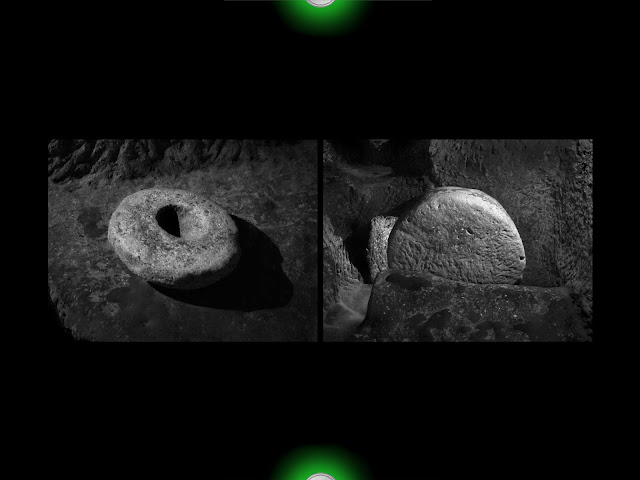
Two Stone Wheels, Underground City, Ozkonak, Cappadocia / Ezan Diptych #4, 19x25" double-page illumination

Prayer Stones #18 Cave of Gold, Underground City, Ozkonak, Cappadocia 19x25" double-page illumination

Two Stone Wheels, Underground City, Ozkonak, Cappadocia / Ezan Diptych #4, 19x25" double-page illumination

Prayer Stones #18 Cave of Gold, Underground City, Ozkonak, Cappadocia 19x25" double-page illumination


Ezan Diptych #10: Cappadocia Landforms 19x25" double-page illumination

Single Image "The Call" #3: Ruins, Pamukkale 19x25" double-page illumination

Ezan Diptych #13: Stone Fragmented Portraits, Antalaya Museum 19x25" double-page illumination


Ezan Diptych #11: Istanbul Residents Going to Work / Young tourist listening to the Ezan, Bosphorus Strait, Istanbul

Celestial Gardens
The image above is the last Prayer Stones symmetrical photograph I made, and, at the same time initiated a new series of photographs I have entitled Celestial Gardens. Although at first I thought of Celestial Gardens merely as an extension of the Prayer Stones project, I eventually understood that it has it's own integrity as a body of work. Celestial Gardens was to become the second "chapter" of "An Imaginary Book" which now includes nine chapters in total. I invite you to continue this journey into the "book" with me by visiting Celestial Gardens.
*
"An Imaginary Book": The Complete Collection of Islamic sacred art inspired projects
`

Prayer Stones #11 & Celestial Garden #1 (source image: marble columns, mineral springs, Pamukkale) 19x25" double-page illumination
Celestial Gardens
The image above is the last Prayer Stones symmetrical photograph I made, and, at the same time initiated a new series of photographs I have entitled Celestial Gardens. Although at first I thought of Celestial Gardens merely as an extension of the Prayer Stones project, I eventually understood that it has it's own integrity as a body of work. Celestial Gardens was to become the second "chapter" of "An Imaginary Book" which now includes nine chapters in total. I invite you to continue this journey into the "book" with me by visiting Celestial Gardens.
*
Like the ground turning green in a spring wind.
Like birdsong beginning inside the egg.
Like the universe coming into existence,
the lover wakes, and whirls
in a dancing joy,
then kneels down
in praise.
Rumi
*
Gloria and I want to express our heartfelt gratitude to the gracious welcoming people of Turkey, the great group of people we traveled with, Go Ahead Tours, and especially Suleyman Karaz - our very excellent tour director and guide. We loved our travel adventure through Turkey. If you'd like detailed information about our tour click here.
I dedicate Prayer Stones to my wife, Gloria, with love and gratitude for all the ways she has helped and supported me, not only in this project but in all of our life's journey together.
Steven D. Foster
I dedicate Prayer Stones to my wife, Gloria, with love and gratitude for all the ways she has helped and supported me, not only in this project but in all of our life's journey together.
Steven D. Foster
Sacred Art, Sacred Knowledge excerpts from the writings of great Islamic Scholars
Welcome Page to The Departing Landscape website which includes the complete hyperlinked listing of my online photography projects dating back to the 1960's, my resume, contact information, and more.
`
